
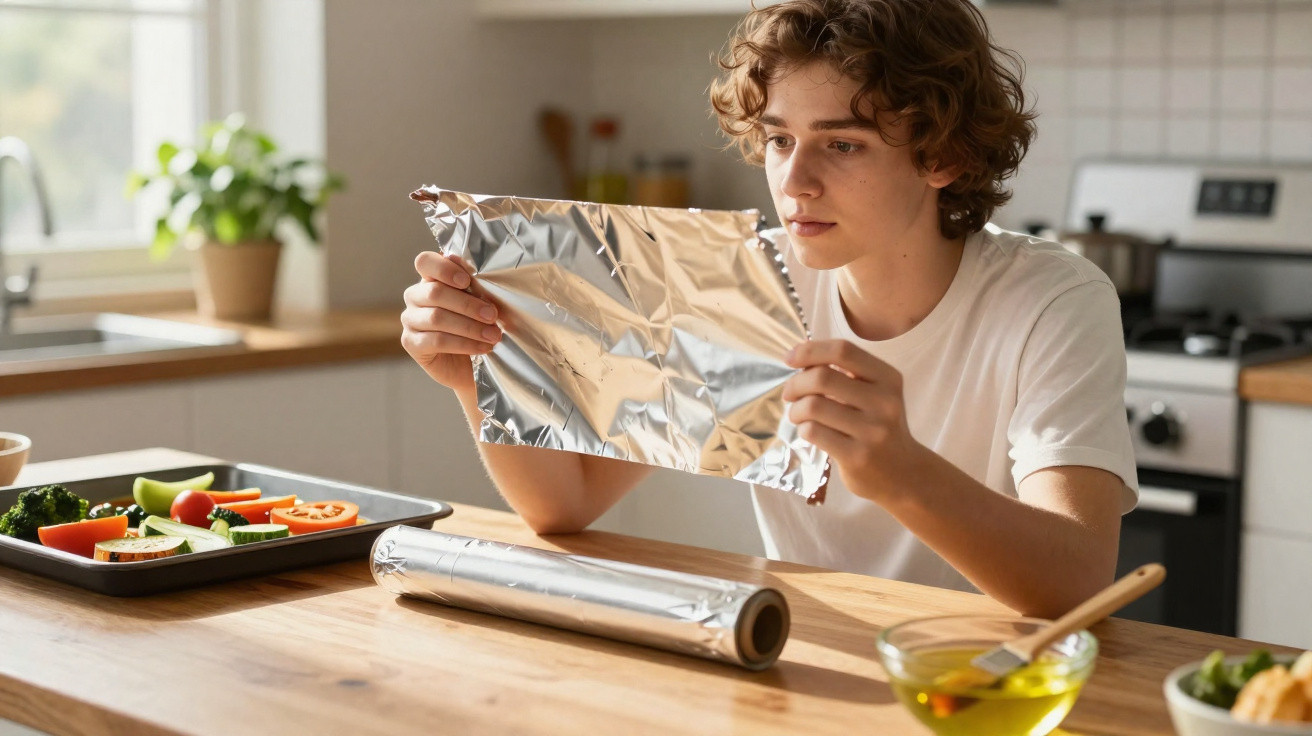
If you regularly use aluminium foil in the kitchen, you have probably noticed that one side is very shiny while the other has a matt finish. This characteristic has led to numerous myths, including the belief that one side cooks food more effectively or retains more heat. In fact, the difference was not designed to give each side a separate purpose. It occurs during manufacturing and, with standard aluminium foil, has no effect on performance when food is cooked or stored.
Why do the two sides of aluminium foil look different?
When it is made, aluminium passes repeatedly through large steel rollers that make it progressively thinner. At the final stage, the foil is so thin that two sheets are rolled together at once to prevent them from tearing.
The surface that comes into direct contact with the polished steel rollers takes on a shiny finish. The side that touches the other aluminium sheet remains matt. The distinction is therefore simply a result of the industrial process, rather than a feature intended to cook food in different ways.
Is there a correct side of aluminium foil to use?
In most cases, no. The shiny and matt sides conduct heat in virtually the same way, so they produce equivalent results when preparing food.
The usual exception is non-stick aluminium foil. For this type of product, the manufacturer applies a special coating to only one side, which is normally indicated on the packaging.
- Standard aluminium foil: either side can be placed against food.
- Oven baking.
- Food kept in the fridge.
- Barbecue parcels.
- Covering containers.
- Only non-stick aluminium foil requires you to follow the manufacturer's instructions.
What care helps aluminium foil last longer?
Although it is highly durable, aluminium foil still requires some care. Avoid using it in a microwave, as the metal can create sparks. It is also advisable not to store highly acidic or very salty foods in direct contact with aluminium for long periods, as this may encourage minor reactions on the material's surface.
By following these recommendations, aluminium foil remains one of the kitchen's most versatile tools for baking, protecting and preserving food.
- Do not use aluminium foil in the microwave.
- Reuse clean sheets whenever possible.
- Recycle the material when it is clean.
- Avoid prolonged contact with highly acidic foods.
- Keep the roll in a dry place.
- Use non-stick foil according to the instructions on the packaging.
Is the shiny side of aluminium foil worth worrying about?
For everyday use, no. The visual difference exists solely because the foil undergoes a particular rolling process during production. For recipes, baked dishes and storage, performance is virtually identical, provided that standard aluminium foil is used.
Choosing a side matters less than using the product properly and observing the safety recommendations for each type of food preparation.
Comments
No comments yet. Be the first to comment!
Leave a Comment